

Recently, I was working with a couple who had a lot of questions about whether or not they needed an officiant for their elopement. They were planning something really intimate and intentional, and they weren’t sure if having another person there would add to the experience or take away from what they were hoping to create.
And their questions are actually ones that I get from couples pretty often.
When you’re planning an elopement, there are so many traditional wedding things you can choose to include or leave out. You don’t have to have a wedding party, a traditional reception, a first dance, or a room full of guests. So it makes sense that couples also wonder whether they need an officiant standing beside them when they exchange their vows.
So, whenever a couple asks me, “Do we need an officiant to elope?” my answer is: it depends!
I know, I know. Not the most straightforward answer. But stay with me, because there are actually two different questions hiding inside that one question. Do you need an officiant to elope legally where you’re getting married? And, separately, do you actually want an officiant to be part of your elopement experience?
Those answers aren’t always the same.
First, Let’s Talk About the Legal Side
Officiants
The first thing you’ll want to figure out is whether an officiant is legally required for your marriage. Marriage laws vary by state, so the rules for your elopement in Vermont might look different from a wedding in New York or Maine.
And if you’re bringing an officiant with you from another state, there can be an extra layer to figure out. Some states require out-of-state ordained ministers or officiants to register, file a petition, or obtain a special one-day certification before they can legally perform your ceremony. This can involve an application through the town clerk, proof of the officiant’s credentials, and a fee.
This is especially important if you’re traveling for your elopement, so don’t just assume that an officiant who is legally able to perform ceremonies in their home state can automatically marry you wherever you’re headed. Your officiant should reach out to the town clerk where you’re getting married well in advance to confirm exactly what’s required.
Marriage Licenses
I’ve also found that marriage license rules can be pretty specific from state to state. In some places, you need to pick up (and potentially return) your marriage license in the exact town where your ceremony will take place. In others, you can get your license from one town and have your ceremony somewhere else within the state. There can also be different rules around who returns the license and when it needs to be returned.
For example, in Connecticut, you need to apply for your marriage license in the town where the ceremony will take place and have the ceremony performed there. New Hampshire has more flexibility, allowing you to obtain your license in one town and get married somewhere else in the state.
So before you build your timeline around a particular location, make sure you understand both the marriage license requirements and the officiant requirements for that specific state.
Below is a quick reference guide for the New England states I work in, with links to the current state and local resources. Just keep in mind that laws and requirements can change, so I always recommend double-checking with the appropriate town clerk before your elopement.
| Officiant Required | Out-of-State Officiant Requirements | Marriage License & Officiant Information | |
| Connecticut | Yes | Any ordained or licensed clergy may perform marriages in Connecticut. No additional out-of-state registration is required. | State of Connecticut |
| Maine | Yes | Nonresident officiants who are authorized to perform civil marriages in their home state must apply for a temporary registration certificate from Maine’s Office of Data, Research, and Vital Statistics. | State of Maine |
| Massachusetts | Yes | Out-of-state clergy or Justices of the Peace must file a nonresident, out-of-state clergy petition and receive a certificate before officiating. A friend or family member can instead apply for a 1-day designation. | State of Massachusetts |
| New Hampshire | Yes | Contact your specific county directly for officiant requirements. | Concord, New Hampshire |
| New York | Yes | The officiant does not have to be a New York resident. However, anyone performing a ceremony within New York City must be registered with the City of New York. | State of New York |
| Vermont | Yes | An out-of-state clergy member generally needs special authorization from the probate court unless their religious organization is located partly in Vermont. Alternatively, anyone 18+ can register as a temporary officiant for a specific Vermont marriage for $100. | Burlington, Vermont |
One More Tip
If you’re traveling for your elopement, I also recommend arriving a few days early when you can. This gives you time to pick up your marriage license, settle in, and spend a little bit of time enjoying the place you’re getting married rather than trying to fit everything into the day before your ceremony.
Once you know what the law requires, then you can start thinking about the more personal question: What do you want your ceremony to feel like?

What Do You Want Your Ceremony to Feel Like?
This is where the question of do you need an officiant to elope becomes a little more personal.
For some couples, the ceremony is a really important part of the day. They want someone to tell their story, guide them through their vows, and create a moment where they can slow down and really honor what they’re doing. They might want something traditional, or they might want something completely personal that doesn’t look like a traditional wedding ceremony at all.
For other couples, they don’t necessarily want another person there. The sacredness comes with it just being the two of them.
Maybe their ideal elopement is just the two of them and their photographer hiking somewhere beautiful. They want to stop when they feel like it, explore a little, have some quiet time together, and exchange their vows somewhere that feels meaningful to them.
Both of these options are completely valid and beautiful ways to elope. And the choice of whether or not to hire a professional officiant really just depends on what feels like you.
All that said, the way your day is structured can also play a significant part in whether or not an officiant is the right choice for you.
If You’re Having an Intimate Wedding, I’d Probably Recommend One
For couples who are bringing along family and friends, I think an officiant can be especially helpful.
When you have 10, 20, or 30 people there, having someone whose job is to guide the ceremony means everyone else gets to simply be present. Your parents can watch. Your friends can laugh and cry with you. And nobody has to worry about remembering what comes next or making sure the ceremony stays on track.
And for an intimate wedding, where the ceremony is one of the main moments you’re sharing with your people, I think that can be really valuable.
But What About a Two-Person Elopement?
This is where I think there’s more room to decide what feels right.
If it’s just the two of you, you may already be thinking, “Do we really want to add another person?” And you might not! I’ve had couples where it made perfect sense for me to hike with them, photograph their day, and let them have their ceremony privately. We could spend the day moving at our own pace, stopping for photos, enjoying the landscape, and creating space for them to be together without having to coordinate around another vendor.
I’m also an ordained minister, which means I can officiate ceremonies throughout New England and New York. When we plan your elopement together, I’ll help you figure out exactly what you need to do for the state where you’re getting married. This way you don’t have to sort through all of the officiant and marriage license logistics on your own.
And if you do want a family member or friend to officiate, of course that’s always an option, too. You don’t have to take on all of the legal logistics yourself. I can help you figure out what that person needs to do to legally officiate in your state and make sure you know what needs to happen with your marriage license during the planning process.
But if having someone there to guide the ceremony, tell your story, or simply witness the moment feels meaningful to you, that’s a completely valid choice, too.

Sometimes You Want to Feel Honored
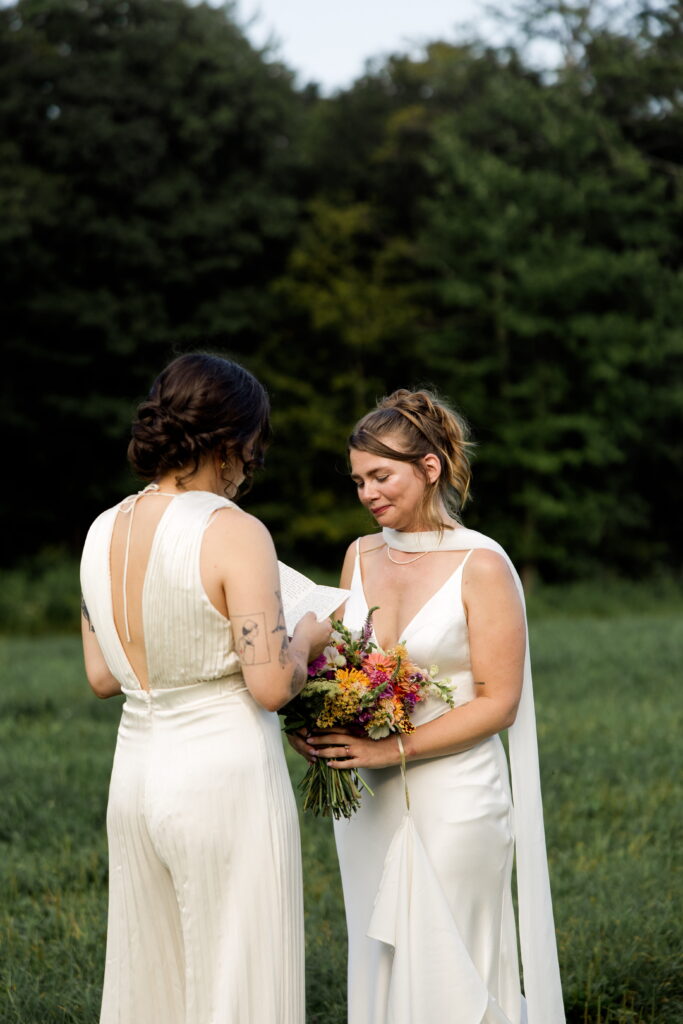
I recently worked with a couple who had both lost their moms, and that played a big role in how they were thinking about their elopement.
They wanted the day to be about the two of them, which was one of the reasons they were choosing an elopement in the first place. But as we talked through the experience, they realized that they also wanted to feel like someone was there to honor this moment with them.
They weren’t necessarily looking for a traditional wedding ceremony. They just wanted another person there who could recognize the importance of what they were doing and make them feel loved as they stepped into this next chapter together.
So they decided to have an officiant.
And I think that’s such a good example of why I don’t think there is one right answer to this question. You can want an officiant without wanting a traditional wedding. You can want a meaningful ceremony without wanting a big guest list. And you can have a two-person elopement and still decide that having someone there to tell your story and guide the ceremony is exactly what you want.
What Does an Officiant Actually Do?
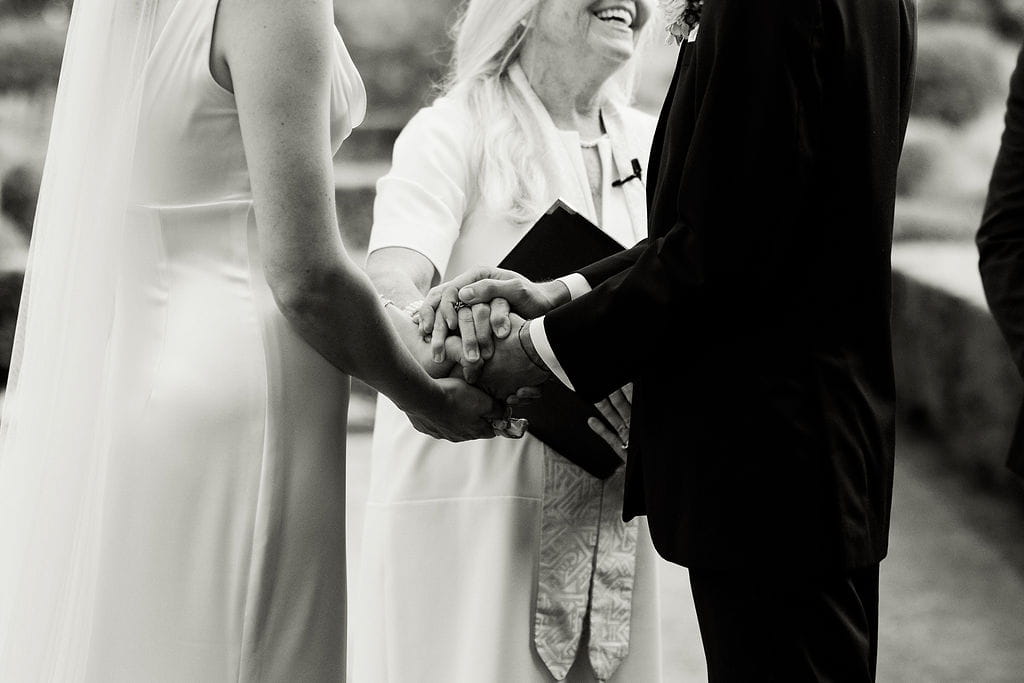
I think a lot of couples who are unsure about hiring an officiant are picturing someone standing at the front of the ceremony, reading a few words, saying “you may kiss,” and then signing the marriage license.
And yes, an officiant absolutely can (and does) do those things! But the officiants I love working with do quite a bit more than that.
They take the time to get to know their couples, ask questions about their relationship, and create a ceremony that feels personal instead of pulling out the same script for everyone. They can help guide you through the ceremony itself, which can be really nice when you’re emotional or nervous and don’t necessarily remember what you’re supposed to do next.
A really great officiant can also change the feeling of the ceremony itself. They can create space for you to slow down, take in the moment, and actually be present with each other instead of worrying about what comes next.
One of My Favorite Officiants for Elopements: Fabi
If you’re looking for an officiant who really understands elopements, Fabi is one of my favorite people to recommend. She’s based in the Adirondacks and works throughout New York, Vermont, and Maine, so she knows the area well and has a really solid understanding of the different officiant requirements and regulations across the region.
What I especially love about Fabi is how intentional her process is. She takes the time to really get to know each couple, then uses what she learns about their relationship, their priorities, and their location to create a ceremony that actually feels like them. She also has a full team of officiants, which means she can pair couples with someone who feels like the right fit rather than taking a one-size-fits-all approach.
Her knowledge of the Adirondacks and other locations is another huge benefit for eloping couples. She can help with location guidance, ceremony flow, and backup plans when the weather doesn’t cooperate, which I know can make a big difference when you’re planning an outdoor elopement.

Another Officiant I Love: Victoria
Victoria Burdick is another officiant I absolutely love working with. She has officiated around 20 of the weddings I’ve photographed, and somehow she keeps showing up on my timelines because couples find her before I even get the chance to recommend her!
She brings so much warmth and intention to her ceremonies, taking the time to learn about each couple and the people who are there to celebrate them. I especially love how she honors the relationships surrounding the couple, whether that’s parents, family, or the people who helped shape them into who they are today. I cry during her ceremonies all the time, which probably tells you something about how meaningful they are.
If you’re planning a larger intimate wedding, Victoria is someone I’d be very happy to recommend.

What If We Want to Keep the Ceremony Just Between Us?
You absolutely can!
Depending on your wedding location, you may be able to self-solemnize, exchange private vows, or create your own little ceremony without a traditional officiant.
If the whole reason you’re eloping is because you want the day to feel private and completely focused on the two of you, there is something really beautiful about finding a quiet spot, holding hands, and saying what you want to say to each other without anyone else there.
Just make sure you separate the legal ceremony from the personal one. In most cases, we can easily create the emotional ceremony you want, but you will still need to follow the marriage laws for your chosen wedding location.
I’m also an ordained officiant myself, so depending on the location and its legal requirements, I can sometimes sign your marriage paperwork while also photographing your elopement. This can be a really nice option for couples who want to keep things simple and don’t want to add another person to the day.
Should a Friend or Family Member Officiate?
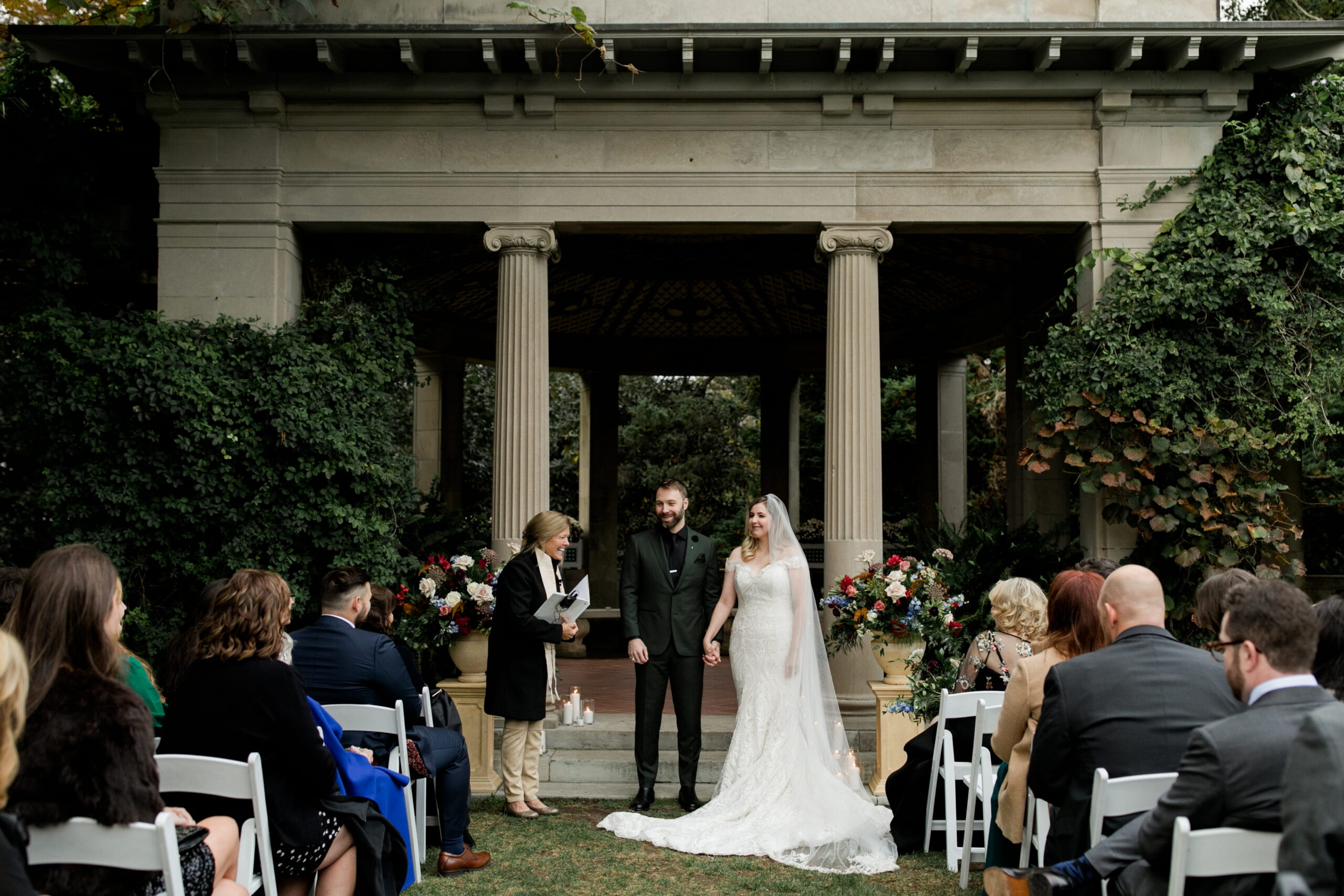
There is something really special about having a person who knows you well stand beside you while you get married. If your best friend has been there through your entire relationship or you have a family member who has played a really important role in your lives, having them tell your story can be incredibly meaningful.
And for an adventure elopement, there are some really fun ways to do this
For example, I had a couple who hiked a 4,000-footer for their elopement, and they chose a friend who already loved hiking to officiate. He got ordained, hiked the mountain with them, and then performed the ceremony at the top. In a situation like that, having a friend along becomes part of the adventure itself.
The one thing I would think about before asking someone you love to take on that role is whether you want them to experience your wedding as your guest or as your officiant.
Being an officiant means remembering the ceremony, keeping track of what comes next, speaking in front of everyone (if you’re having other guests), managing emotions, and handling the legal pieces correctly. Even if they’re excited to do it, they may experience the day differently because they have a job to do.
For some people, that’s completely worth it. For others, having a professional handle the ceremony means their best friend, sibling, or parent can sit back, cry, laugh, and actually experience the moment with them.
There isn’t a wrong choice here. Just think about what you want that person to remember about your wedding day, too.
How to Choose the Right Officiant for You
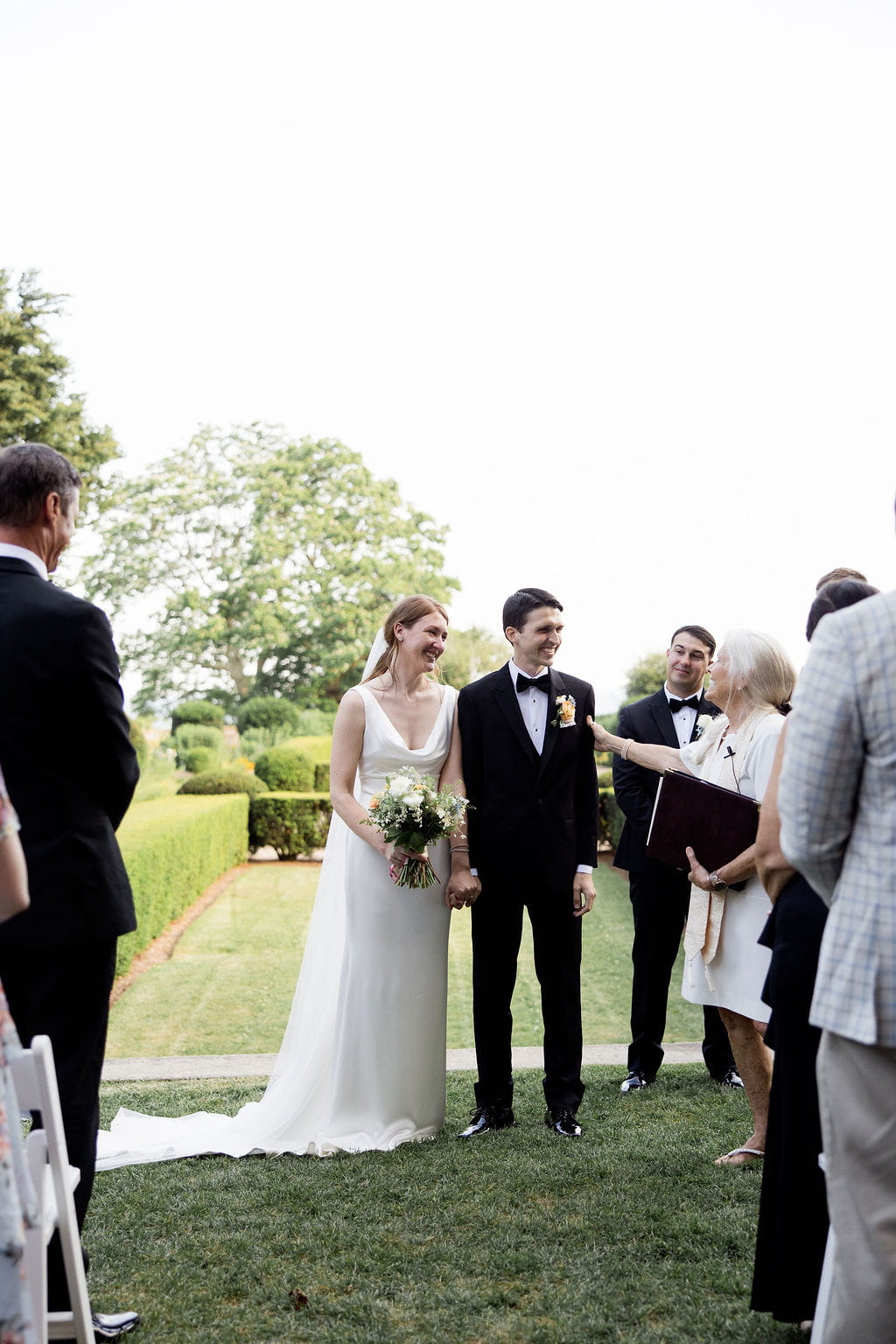
If you’ve decided that an elopement officiant sounds like something you want, I would spend a little time finding the right person rather than just hiring whoever happens to be available.
Here are a few questions I’d ask:
- Do they write custom ceremonies?
- Will they take the time to learn your story? If so, how?
- Can they accommodate your beliefs or non-beliefs?
- Will they hike with you if you’re planning an adventure elopement?
- How do they handle weather or location changes?
- What exactly is included in their services?
- Will you be able to read the ceremony beforehand?
And perhaps most importantly, do you actually like them?
You’re going to be sharing a pretty vulnerable moment with this person. You want someone whose personality feels comfortable to you and whose approach to marriage and ceremonies aligns with what you want.
If your faith or spirituality is important to you, look for someone who understands that and is comfortable incorporating it into the ceremony. If you’re nonreligious, the same thing applies. You don’t need to compromise on what feels right to you just because you’re getting married.
If you’re part of a particular church or denomination, another great place to start is by asking your home church or pastor for recommendations. I recently worked with a couple who did exactly this when they planned their wedding in another state, and their church connected them with someone in the area.
And, of course, you can always ask your photographer for recommendations.
So, Do You Need an Officiant to Elope?
Maybe!
If you’re planning an intimate wedding with family and friends, I would probably recommend having one. It gives everyone someone to follow and allows your guests to simply enjoy being there with you.
If you’re planning a two-person elopement, I think you have a lot more freedom. You might love the idea of having someone there to tell your story and create a meaningful ceremony with you. Or you might love the idea of hiking somewhere beautiful, finding a quiet spot, and exchanging your vows with just the two of you.
And if you’re somewhere that legally requires an officiant, that answers the question for you!
The important thing is that you don’t hire an officiant just because you think an elopement requires one. And you also don’t have to skip an officiant because you think elopements are supposed to be private and simple.
Think about what you want to remember.
Is it someone there who can tell your story? Do you want your family and friends to simply witness and celebrate? Do you want the ceremony to be a big emotional moment in the middle of your day? Or would you rather have a little spot somewhere beautiful where it’s just the two of you, your vows, and the person you love most?
There is room for all of those things and your elopement doesn’t have to follow a formula. It just needs to feel like the two of you.
Want to Keep Planning?
If you want to dig a little deeper into what an officiant can bring to your wedding or elopement, my friend Fabi from Adirondack Ever After was kind enough to share her perspective with me while I was putting this post together. She has more resources about working with an officiant that you can read on her blog.
And if you want to see another way of thinking about your guest count and overall experience, I also wrote about elopements vs. intimate weddings here. It can be helpful if you’re still figuring out whether you want your day to be just the two of you or if you’d rather bring along some of your favorite humans.
And for couples looking for an officiant in New England, Victoria Burdick is someone I absolutely love recommending. Her approach is so personal and intentional, and I’ve seen firsthand how much she can add to a ceremony. You can contact her directly at victoria.burdick@authenticceremony.com